
Sustainability
At Akuart, we see sound, space and responsibility as closely connected. For us, acoustic design is about more than comfort. It shapes how people work, learn and interact, and we approach it with care for its wider impact.
Sustainability is an ongoing way of working rather than a final destination. It informs our choices of materials, how our products are constructed, how they function over time, and how they can be maintained, renewed and brought back into circulation. Our approach can be understood as interconnected layers:
Your Title Goes Here
Your content goes here. Edit or remove this text inline or in the module Content settings. You can also style every aspect of this content in the module Design settings and even apply custom CSS to this text in the module Advanced settings.
Responsible Sourcing
Every choice of material has consequences. That is why we prioritise suppliers who can demonstrate reduced environmental footprints and provide verified data. Aluminium with a high percentage of recycled content, textiles made from 100% recycled fibres, and PET absorbers containing at least 75% recycled fibres from post-consumer plastics are central to our products.
All direct suppliers are screened for social and environmental responsibility and have signed our Akuart Code of Conduct including supply chain responsibility.
Design For Disassembly
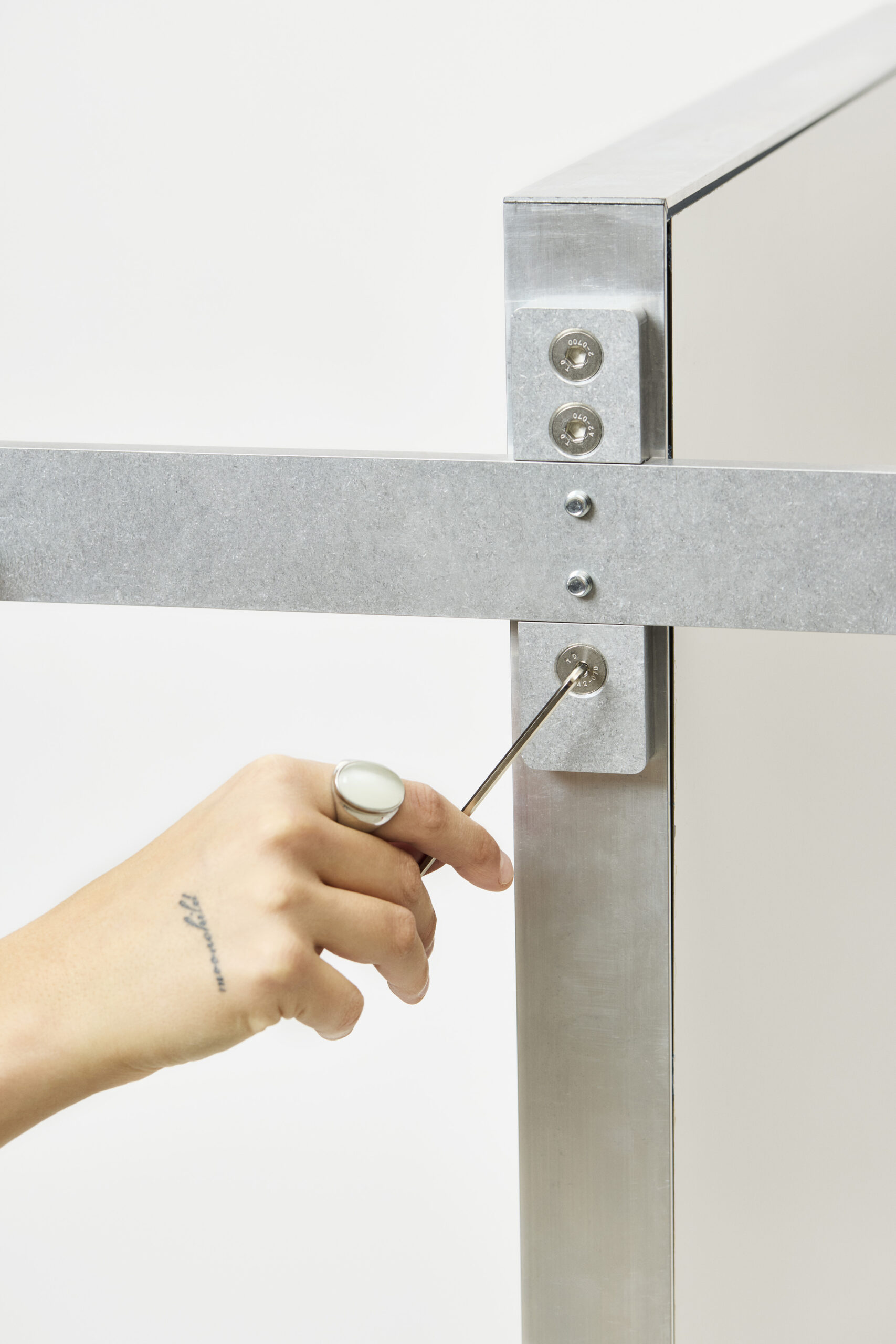
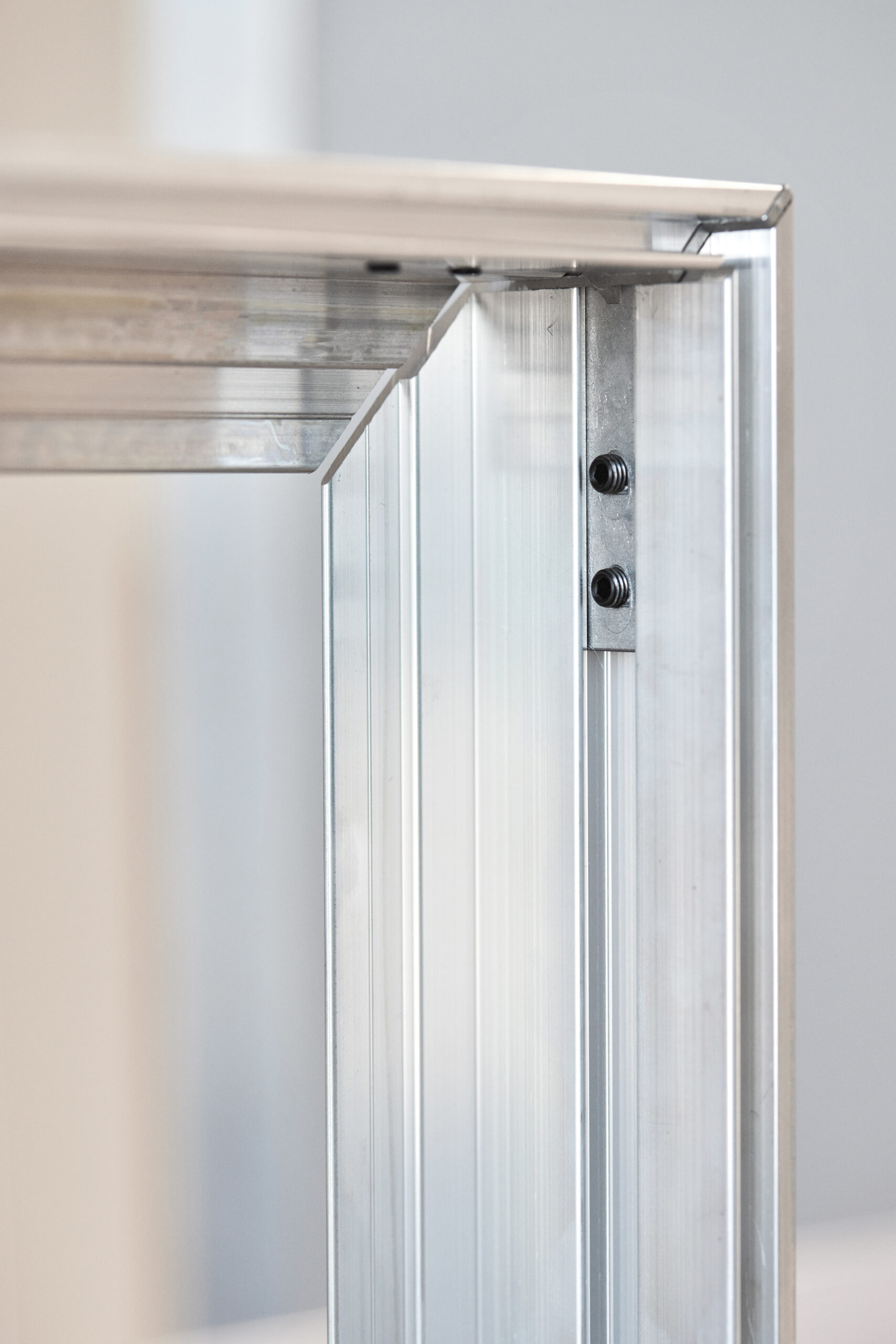
Circularity is a design principle, not an outcome we claim. Today, the majority of our products are designed for disassembly. Mono material components are joined to be taken apart, repaired and reassembled, allowing systems to adapt and remain in use over time and ensure material recovery at end-of-life.
For products from earlier design generations, we follow a clear transformation roadmap, gradually reworking solutions to support longer lifespans and improved material recovery. This approach preserves material value, reduces waste and ensures our product range continues to evolve without compromising performance.
Waste Reduction through Made-To-Order
We produce on demand rather than for stock. Each product is made to order, aligning materials and production precisely with real needs instead of forecasts. This approach combined with focus on elimination of production waste reduces surplus and limits unnecessary material use . At the same time, it allows us to deliver solutions tailored to each project while keeping resource use deliberate and controlled.
Transparency & Documentation
Our sustainability work is supported by documentation and third-party verification, and it is continuously developed as an ongoing process. This includes Life Cycle Assessment (LCA) and Environmental Product Declarations (EPDs) prepared in accordance with EN 15804 and Möbeltakta product certification where applicable. Each product is linked to a digital product passport that provides long-term traceability of specifications, materials, components and documentation.
Repair & renewal
Our products are designed with longevity in mind and supported by clear systems for repair, refresh and upgrade. Individual components such as canvases, absorbers or frames can be replaced as needed, allowing interiors to evolve without replacing the entire solution.
Providing easy access to unit specific product information through our digital product passports supports maintenance, component replacement and future upgrades, while enabling informed decisions around reuse, refurbishment and end-of-life handling. Together, this approach extends product life, reduces waste and helps preserve material value.
Design Advisory Services
To help clients achieve both acoustic and aesthetic goals, Akuart offers professional guidance throughout the design process. Our team provides acoustic design advice, assistance in selecting materials and colours, and customised solutions for specific architectural contexts. This ensures that every project is tailored to its environment, combining performance, visual harmony, and enduring relevance.
Design for Circularity
Circular design is about enabling products to have more than one lifecycle, designed so they can be repaired, renewed, and recycled. At Akuart, design for circularity is part of a is part of a continuous improvement, where circular thinking drives design decision. We see our products as part of a living cycle, not a linear journey. Instead of being used and discarded, each element is conceived to be maintained, renewed, and ultimately returned to the loop. This is achieved through principles:
Design for
circularity
Circularity is about eliminating the concept of waste and reducing the pressure on natural ressources produced by our products. By carefully selecting materials and creating systems that support reuse, we ensure that Supersonic panels remain part of the cycle.
Design for
longevity
Design for Repairability
No product should be discarded because of minor wear or damage. Supersonic panels are designed so that parts can be easily maintained or replaced.
Design for disassembly
Disassembly is the foundation of circularity. The Supersonic Collection is designed for easy separation and composed of monomaterials, ensuring efficient component and material recovery.
Circal 100R
Aluminium is one of the most durable, versatile and recyclable materials available. Yet producing primary (virgin) aluminium remains highly carbon-intensive, accounting for approximately 2% of global CO2 emissions.
This is why Akuart has chosen Hydro CIRCAL 100R, a revolutionary aluminium made from 100% post-consumer scrap. Every kilogram of CIRCAL 100R comes from material that has already lived one or several lives, such as window frames, façades and other architectural products, and is re-melted into new high-quality aluminium without any loss of properties
Möbelfakta Certificate
Our Supersonic Wall Panel range is Möbelfakta certified, a third-party validation of how we design and produce our solutions. The certification covers material choices, production methods, quality, transparency, and responsibility across the entire value chain. It reflects a structured approach to durability and documentation, aligned with the expectations of the Scandinavian market.
For us, Möbelfakta is more than a label. It recognises years of deliberate decisions and a long-term commitment to doing things properly, from sourcing to performance. Responsibility is not a constraint on our design. It’s part of the foundation.
LCA, EPDs & Carbon Footprint
At Akuart, we believe responsibility requires transparency. That is why we invest in comprehensive Life Cycle Assessments (LCAs) and publish third- party verified Environmental Product Declarations (EPDs) for the Supersonic Wall Panel range, prepared in accordance with the international standard EN 15804 + A2.
Our LCA calculations are based on these verified EPDs and focus so far on the Supersonic Wall Panel and Wall Panel Artwork, providing an accurate overview of their environmental impact from materials and production to transport and end of life.
Inside our EPDs
Your Title Goes Here
Your content goes here. Edit or remove this text inline or in the module Content settings. You can also style every aspect of this content in the module Design settings and even apply custom CSS to this text in the module Advanced settings.
Cradle to Gate (A1 - A3)
From raw material extraction to manufacturing. This stage captures the true embodied carbon of the materials we use, including aluminium, PET absorbers and recycled textiles.
Use Stage (B1-B7)
Our products do not, under normal use, require any substantial maintenance or service. Their modular and durable construction minimises environmental impact during use and allows for easy updates if visual or functional needs change.
End of life (C3-C4, D)
When a panel reaches the end of its use, each material can enter the correct recycling stream. Because the Supersonic Wall Panel range is designed for disassembly, aluminium, PET and textiles can all be separated, reducing waste and closing loops.
Proof in numbers
Circular materials make a measurable difference.
Example: Supersonic Wall Panel (1000 × 1000 mm) With a 75R aluminium frame, the panel emits ~9.16 kg CO₂e (A1–A3). With a 100R (Hydro CIRCAL 100R) frame, emissions are ~5.39 kg CO₂e (A1–A3). Choosing the 100R option reduces the cradle-to-gate footprint by about 41%, thanks to aluminium made from 100% post-consumer scrap. For larger projects such as offices or schools, these savings add up to hundreds or even thousands of kilograms of CO₂e avoided. The results are based on third-party verified Environmental Product Declarations (EPDs) for the Supersonic Wall Panel range. The calculations are drawn from Akuart’s Life Cycle Assessment (LCA) data.
The Velux LKR Innovation House
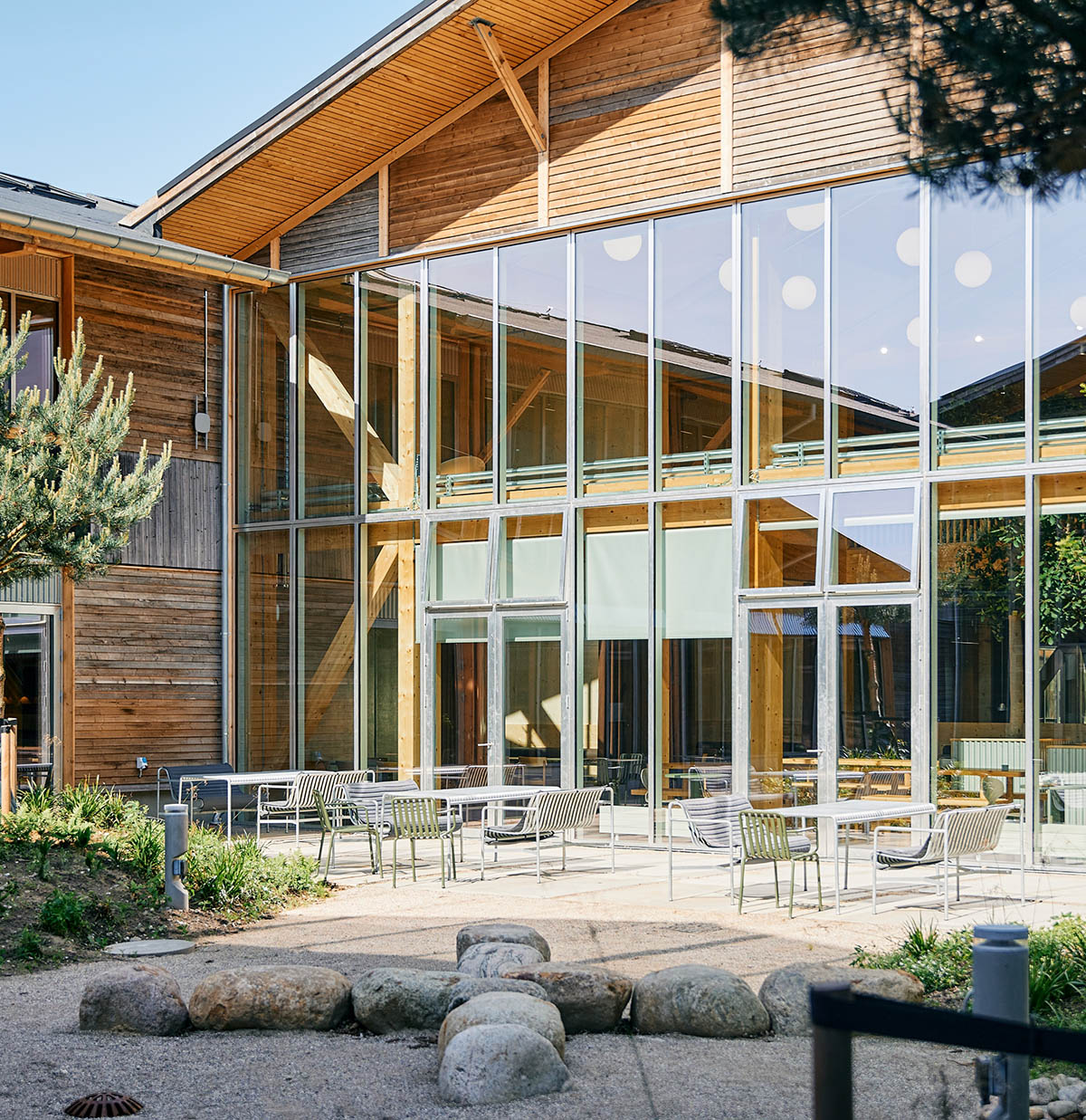
The LKR Innovation House in Østbirk, Denmark, turns the company’s former logistics facility into a bright, timber-led workspace filled with daylight and surrounded by nature. More than half of the original structure, including glue-laminated wood beams, concrete slabs, and the timber façade, was retained, reducing material use and carbon emissions.
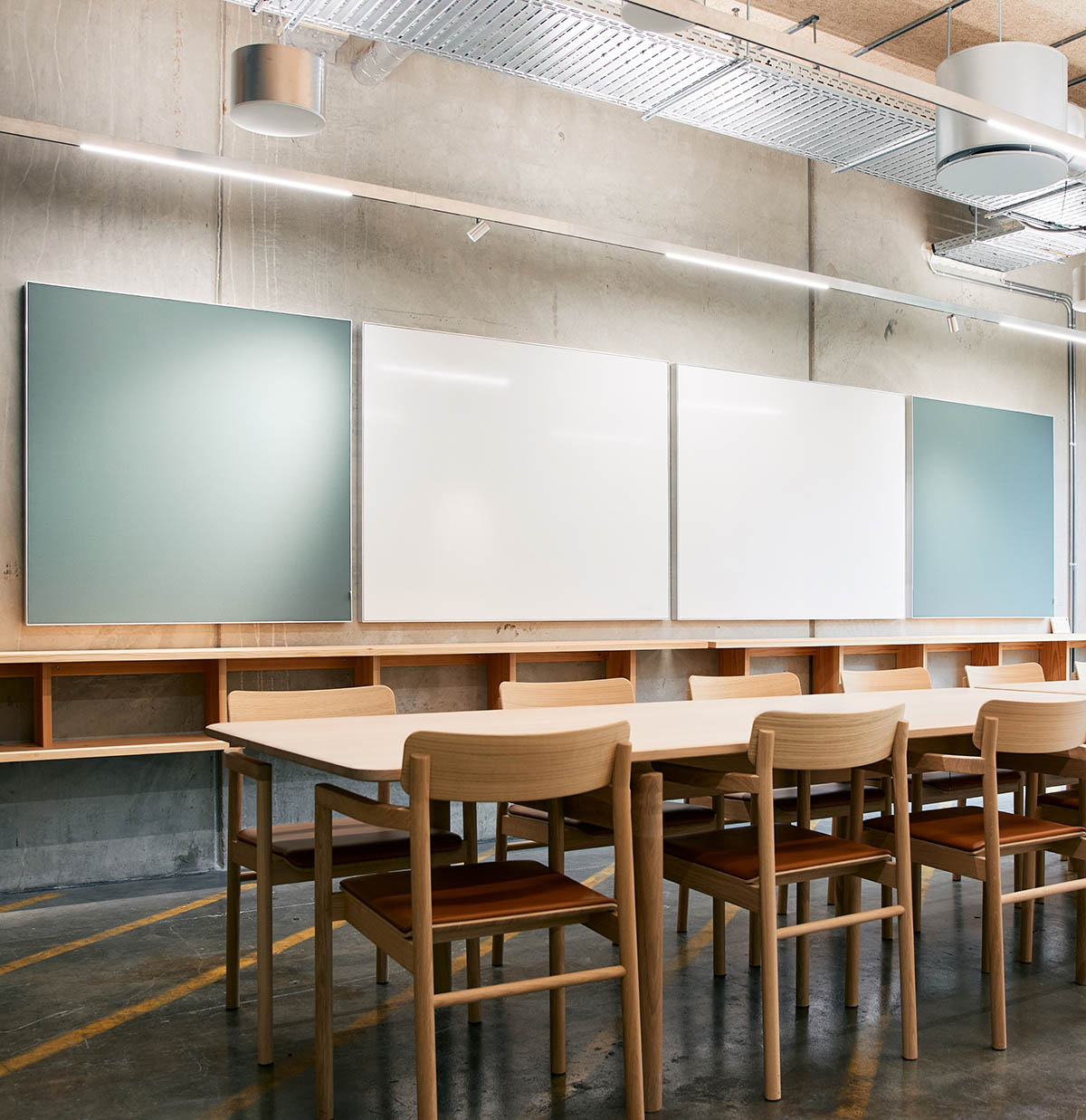
To complement this sustainable approach, Akuart supplied the upgraded Supersonic Wall Panel 100R, along with Writing Boards and Mobile Writing Boards. The panels feature Hydro CIRCAL 100R, aluminium made from 100% post-consumer scrap with a carbon footprint below 0.5 kg CO2e/kg.